
Reading a Body Composition Report: A Field Guide to the Terms and Numbers

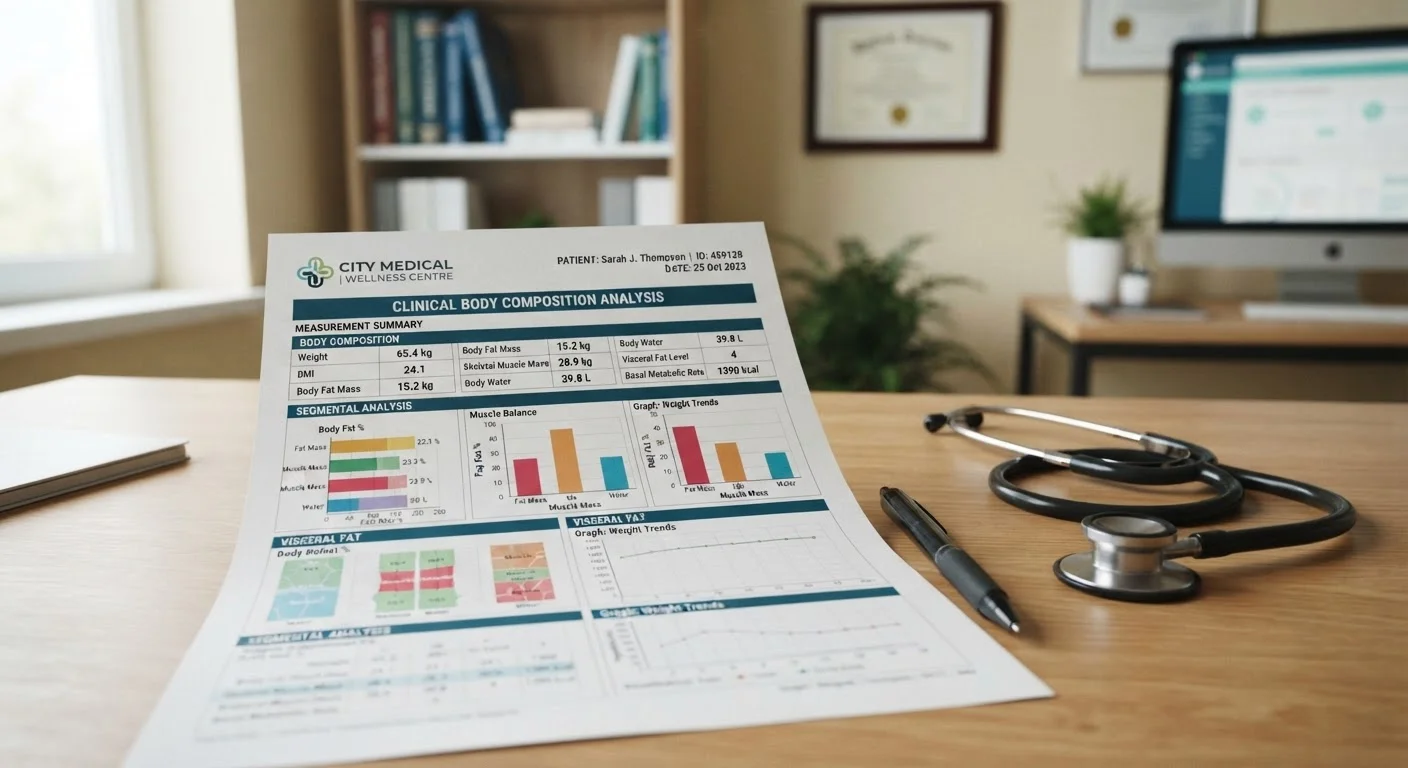
Photo: YetaWellness.com | Explore Trending Blogs editorial
What You're Actually Looking At
A body composition report breaks your total body weight into distinct physiological compartments - fat tissue, muscle, bone, and water - rather than treating weight as a single undifferentiated number. Whether your report came from a DXA scan, a bioelectrical impedance analysis (BIA) device, or another method, the core terms are largely consistent across formats. If you're new to these concepts, this no-jargon introduction is a useful starting point before diving into the specifics below.
For a deeper look at how different testing methods produce these numbers - and how reliable each one is - see this plain-language guide to body composition testing methods.
Fat Mass
The total weight of all fat tissue in the body, including both essential fat (needed for normal physiological function) and storage fat. Reported in pounds or kilograms.
Fat-Free Mass (FFM)
Everything in the body that is not fat: muscle, bone, organs, connective tissue, and water. Also called lean body mass. Together with fat mass, it equals total body weight.
Body Fat Percentage
Fat mass divided by total body weight, expressed as a percentage. It describes how much of your total weight comes from fat tissue, independent of your overall body size.
Skeletal Muscle Mass (SMM)
The mass of muscle tissue attached to the skeleton and responsible for voluntary movement. It is the component of fat-free mass most responsive to exercise training.
Visceral Fat
Fat stored within the abdominal cavity, surrounding internal organs. It is metabolically active and is associated with cardiovascular and metabolic health risks at elevated levels.
Total Body Water (TBW)
The total amount of water in the body, comprising intracellular water (inside cells) and extracellular water (outside cells). It constitutes the largest fraction of fat-free mass.
Appendicular Lean Mass (ALM)
The combined lean (muscle) mass of the arms and legs. It is a common research metric for evaluating muscle mass in the context of aging and physical function.
Bone Mineral Content (BMC)
The amount of mineral matter - primarily calcium - contained within bones, as measured by DXA. Higher BMC generally indicates greater bone density and structural integrity.
Key Metrics Decoded
Most reports organize results around a handful of foundational measures. Understanding each one in isolation - and how they relate to each other - gives you a far more complete picture than body weight alone.
| Primary compartments reported | Fat mass, fat-free mass, skeletal muscle mass, bone mineral content |
| Most clinically tracked visceral fat indicator | Visceral fat area (cm²) or rating scale score |
| Body fat percentage reference ranges | Vary by sex and age; always use ranges on your specific report |
| Key variable affecting BIA accuracy | Hydration status at time of measurement |
| Gold-standard method for BMC measurement | Dual-energy X-ray absorptiometry (DXA) |
Fat mass vs. fat-free mass: Fat mass is the total weight of all adipose (fat) tissue in the body. Fat-free mass (FFM) - sometimes called lean body mass - covers everything else: muscle, bone, organs, connective tissue, and water. These two values should always add up to your total body weight on the report. To understand why researchers and clinicians track lean body mass separately from total weight, see this detailed explainer on lean body mass.
Body fat percentage: This is fat mass expressed as a proportion of total body weight. It is generally considered more informative than weight alone because it accounts for body size. Healthy ranges differ by sex, age, and measurement method, so always interpret your number in the context of the reference ranges printed on your specific report. For a side-by-side comparison of body fat percentage with BMI and waist-to-hip ratio, see this comparison of common body composition metrics.
Skeletal muscle mass (SMM): A subset of fat-free mass representing the contractile muscle attached to your skeleton - the tissue most directly influenced by resistance training and physical activity. Some reports display this as appendicular lean mass (ALM), focusing on the arms and legs, which is commonly used in research on muscle function and aging.
Visceral fat rating or area: Visceral fat surrounds the abdominal organs. Reports typically express it as a rating on a numbered scale or as an estimated area in square centimeters. Elevated visceral fat is associated with a higher risk of metabolic conditions, independent of overall body fat percentage - making it one of the more clinically meaningful numbers on the page.
Total body water (TBW): Many BIA-based reports include total body water, sometimes split into intracellular water (ICW, inside cells) and extracellular water (ECW, outside cells). Hydration status significantly affects BIA readings, which is why consistent testing conditions matter. See how to approach assessments more reliably for preparation guidance.
Bone mineral content (BMC) or bone density: Primarily reported on DXA outputs, this value reflects the mineral mass - mainly calcium - within your bones. It is distinct from muscle and fat measurements and is particularly relevant for assessing fracture risk over time.
For context on how these measures connect to energy metabolism and weight regulation, the Metabolism Basics hub and plain-language metabolism reference guide offer complementary background.
This article is for informational purposes only and is not a substitute for personalized medical advice. Consult a qualified healthcare professional to interpret your individual body composition results and what they may mean for your health.
The content on this site is for informational purposes only and is not a substitute for professional advice. Always consult a qualified professional for guidance specific to your situation.