
What Is Lean Body Mass and Why Do Researchers Track It Separately from Weight?

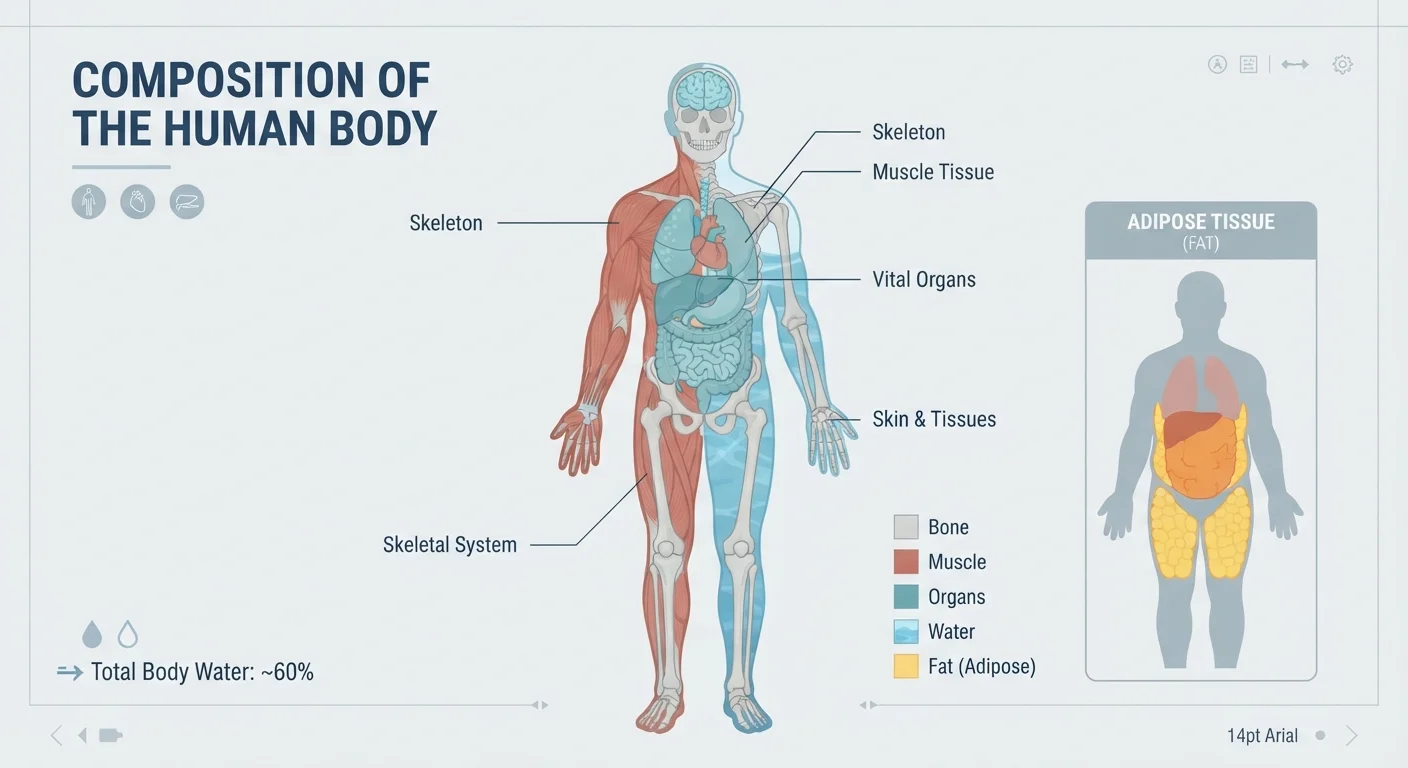
Photo: YetaWellness.com | Explore Trending Blogs editorial
Key Takeaways
- Lean body mass includes muscle, bone, organs, water, and connective tissue - not just muscle alone.
- Researchers track LBM separately from total weight because fat mass and lean mass have distinct health implications.
- LBM declines with age in a process called sarcopenia, making it a key marker in aging and chronic disease research.
- Two people with identical body weights can have very different lean-to-fat ratios, with different health outcomes.
- LBM influences your resting metabolic rate - more lean tissue generally means a higher caloric demand at rest.
What Lean Body Mass Actually Includes
When most people hear the term lean body mass, they assume it refers to muscle. In reality, it describes a much broader category. Lean body mass is the sum of every tissue in the body that is not classified as fat - skeletal muscle, bone mineral, organs such as the liver and kidneys, connective tissue, and all body water, including blood plasma and intracellular fluid.
This distinction matters because each of these tissue types plays a different physiological role and responds differently to diet, exercise, illness, and aging. Bone and muscle, for instance, are both components of LBM, yet they respond to different stimuli and decline through different mechanisms. Understanding LBM as a composite - rather than a synonym for muscle - is foundational to interpreting body composition data accurately.
For a broader look at how all body composition metrics fit together, see what body composition really measures.
Why Total Body Weight Falls Short as a Health Metric
A bathroom scale measures gravitational force - the combined mass of fat, muscle, bone, water, and everything else. It cannot distinguish between a pound of adipose tissue and a pound of skeletal muscle, yet those tissues have profoundly different effects on metabolism, hormonal signaling, and physical function.
Two individuals can share an identical body weight while having vastly different body compositions. One may carry a higher proportion of lean tissue with relatively low fat mass; the other may carry significantly more fat with less muscle and bone. Research consistently shows that these differences are associated with different metabolic risk profiles, regardless of what the scale reads.
3-8%
Muscle mass lost per decade after age 30
Research published in the journal Current Opinion in Clinical Nutrition and Metabolic Care estimates this range as a general benchmark for age-related skeletal muscle decline in adults.
~70%
Of resting metabolic rate driven by lean tissue
Studies on resting energy expenditure suggest that metabolically active lean tissues - including muscle and organs - account for the large majority of calories burned at rest.
Up to 50%
Muscle mass potentially lost by age 80
According to research cited by the American Academy of Orthopaedic Surgeons, individuals may lose up to half their peak muscle mass by the eighth decade of life in the absence of intervention.
This is precisely why clinical researchers and sports scientists measure LBM as a distinct variable. It allows them to ask more precise questions: Is a patient losing fat, muscle, or both during a medical intervention? Is an older adult's muscle mass declining faster than expected for their age? Is a training program actually increasing lean tissue, or merely shifting body water? Weight alone cannot answer any of these questions.
Decoding a body composition report can help you understand what the numbers behind these measurements actually mean.
Lean Body Mass in Aging and Disease Research
One of the most active areas of LBM research involves aging. Adults typically begin losing skeletal muscle mass in their 30s, with losses accelerating significantly after 60. This process - called sarcopenia - is associated with reduced mobility, increased fall risk, slower recovery from illness, and lower overall quality of life. Researchers track LBM longitudinally to identify who is losing lean tissue faster than expected and to test whether interventions can slow that decline.
Beyond aging, LBM is an important variable in cancer research, where muscle wasting (cachexia) is both a symptom and a prognostic marker. It is tracked in kidney disease management, surgical recovery studies, and research on metabolic conditions where muscle-to-fat ratios predict outcomes independently of total body weight.
Bone mass - a component of LBM - adds another layer to this picture. How bone density fits into body composition is often underappreciated in general health discussions but carries significant implications for long-term function.
It is also worth noting that LBM varies systematically by sex and hormonal environment. Why body composition metrics differ between women and men explains why reference ranges and research interpretations are not one-size-fits-all.
Lean Body Mass and Metabolic Rate
Lean tissue - particularly skeletal muscle - is metabolically expensive to maintain. It consumes energy at rest in a way that fat tissue largely does not. This is why resting metabolic rate (RMR), the number of calories your body uses to sustain basic functions without any physical activity, is closely correlated with lean body mass. Individuals with greater amounts of lean tissue generally have higher RMRs.
This relationship has practical implications for understanding how metabolism changes across the lifespan. As LBM naturally declines with age, resting caloric demand tends to decrease as well - a pattern that is separate from behavioral changes in activity or eating. Researchers studying metabolic adaptation track LBM specifically because it is one of the primary biological drivers of that shift.
For context on how these changes unfold over decades, how muscle and fat shift across life stages provides a detailed look at the trajectory from youth through older adulthood.
This article is for informational purposes only and is not a substitute for personalized medical advice. Consult a qualified healthcare professional for guidance specific to your health status.
Frequently Asked Questions
The content on this site is for informational purposes only and is not a substitute for professional advice. Always consult a qualified professional for guidance specific to your situation.